Der weit verbreitete Einsatz von Kinesiologisches Tape hat in der modernen Sportmedizin zu einem Wandel von “aktiver Ruhe” zu “aktiver Erholung” geführt. Wenn man weiß, wie man ein herkömmliches Muskelzerrungsband anlegt, kann dies den Unterschied ausmachen zwischen einer schnellen Rückkehr auf das Spielfeld und einem langen Aufenthalt an der Seitenlinie, egal ob man ein kleines “Ping” im Bein oder einen großen Bruch hat.
Das Muscle Pull Tape fühlt sich an wie menschliche Haut und sorgt für einen Auftrieb, der die Durchblutung fördert und Beschwerden lindert, ohne die Bewegungsfreiheit einzuschränken. Aber das Anlegen ist nicht so einfach wie das Aufkleben eines bunten Streifens auf die Haut; es muss auf klinische Weise mit Spannung und Positionierung durchgeführt werden, damit es funktioniert.
Wie man Kinesiologieband bei Muskelzerrungen verwendet
Bevor der Klebstoff mit der Haut in Berührung kommt, beginnt der “Standard” für das Anlegen von Muskelzerrungsbändern. Professionelle Trainer befolgen eine Reihe präziser Regeln, um sicherzustellen, dass das Tape auch dann noch funktioniert, wenn Sie schwitzen, sich bewegen oder duschen.
Vorbereitung der Haut und Anbringung an der richtigen Stelle
Die Haut muss absolut frei von Ölen, Lotionen und zu vielen Haaren sein, damit der Kleber richtig haftet. In der Regel wird der Bereich mit einem Alkoholtuch gereinigt. Außerdem muss der Muskel während der Anwendung gedehnt werden. Dadurch wird sichergestellt, dass das Tape “Falten” oder Wellen bildet, wenn der Muskel in seine normale Position zurückkehrt. Auf diese Weise wird die Haut angehoben und die Durchblutung verbessert.
Das Anker-Protokoll
Am Anfang und am Ende jeder professionellen Bewerbung steht ein “Anker”. Der Anfang und die letzten zwei Zentimeter der Kassette sind diese. 0% Stretch ist der beste Weg, um Anker zu testen. Wenn Sie an den Rändern des Muscle-Pull-Tapes ziehen, zieht es an Ihrer Haut, was dazu führen kann, dass es sich zu früh ablöst und vielleicht Reizungen oder Blasen verursacht.
Wie man sich bei einer Kniesehnenzerrung umschnallt: Eine Schritt-für-Schritt-Anleitung
Die Kniesehne ist eine der Muskelgruppen, die bei Sportarten wie Sprinten und Springen am häufigsten verletzt wird. Die richtige Anwendung des Tapes für die hintere Oberschenkelmuskelzerrung kann Ihnen das strukturelle Neurofeedback geben, das Sie brauchen, um sich nicht erneut zu verletzen, während Sie sich erholen.
Machen Sie sich bereit: Stehen Sie auf und beugen Sie sich ein wenig vor, um die Kniesehnen sanft zu dehnen.
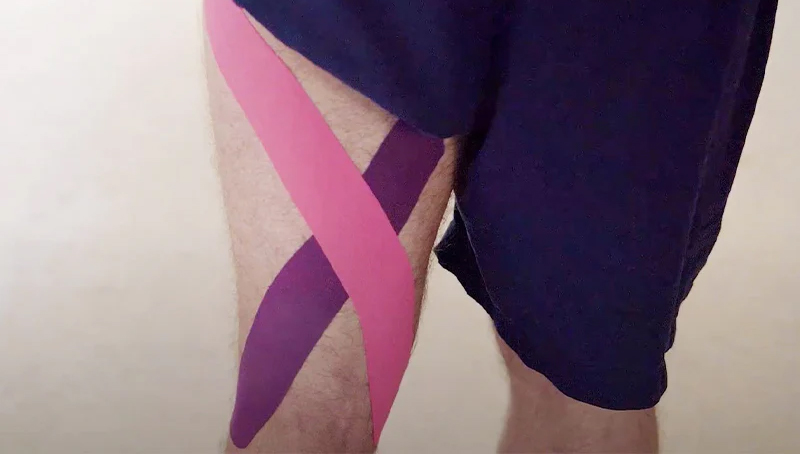
Der Basis-Streifen: Beginnen Sie am unteren Ende der Gesäßfalte und arbeiten Sie sich mit einem langen “I-Streifen” Kinesiologieband bis zur Kniekehle vor. Verwenden Sie es mit einer mäßigen Spannung, zwischen 25% und 50%.
Der Dekompressionsstreifen: Suchen Sie die Stelle, die am meisten schmerzt. Legen Sie einen zweiten, kürzeren Streifen nach der “Pflaster”-Methode waagerecht über die Schmerzstelle. Die Mitte des Streifens sollte eine Spannung von 75% haben, die Enden sollten eine Spannung von 0% haben.
Diese Methode der Bandagierung bei einer Kniesehnenzerrung gibt den Muskelfasern in ihrer gesamten Länge Halt und entlastet den empfindlichsten Bereich der Zerrung.
Kinesiologisches Tape bei Leistenzerrung für mehr Stabilität
Es ist schwierig, eine Leistenzerrung zu behandeln, weil die Adduktorenmuskeln bei praktisch jeder Aktion des Unterkörpers zum Einsatz kommen. Das kinesiologische Taping bei einer Leistenzerrung erfordert eine subtilere Methode, um mit den Belastungen umzugehen, die in viele Richtungen wirken.
Die Fan-Technik: Ein fächerförmiger Schnitt des Muskelzerrungsbandes kann einen größeren Bereich abdecken, wodurch sich Schwellungen und Blutergüsse besser verteilen als bei einem einzelnen Streifen. Diese Technik wird häufig bei größeren Muskelzerrungen angewendet.
Der Support Strip: Das Muskelzugband beginnt in der Mitte des inneren Oberschenkels und verläuft in Richtung Beckenknochen mit einer 50%-Dehnung. Dies gibt dem Muskel eine physische “Erinnerung”, engagiert und sicher zu bleiben.
Warum professionelle Qualität wichtig ist: Ihre Lieferungen von WIR MACHTEN
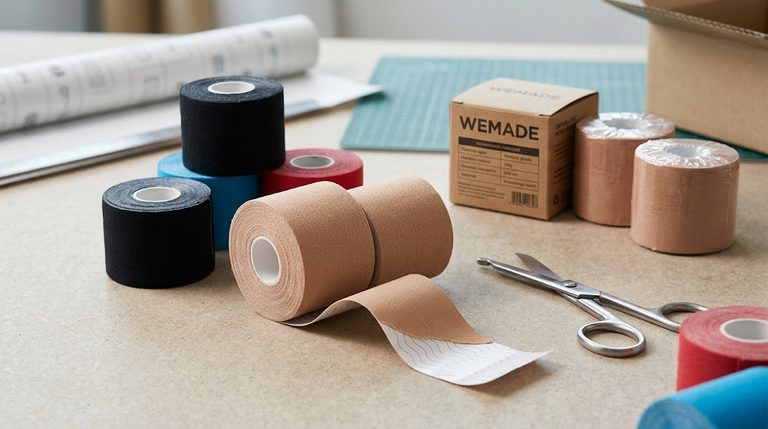
In dem Maße, in dem sich die globale Sportindustrie zu einer immer spezielleren Versorgung von Sportlern entwickelt, wird die Qualität der für Muskelzerrungsbänder verwendeten Materialien immer wichtiger. WEMADE ist ein professioneller Sportbandgerät die diesen Erholungsplänen die nötige technologische Unterstützung gibt.
Am Ende
Das Muskelzerrungsband funktioniert nicht durch Zauberei, sondern durch eine Mischung aus Textiltechnik und Anatomie. Sie können Ihre Genesungszeit erheblich beschleunigen, wenn Sie sich an den professionellen “Anwendungsstandard” halten, der eine ordnungsgemäße Vorbereitung, eine spannungsfreie Verankerung und maßgeschneiderte Bänder für Kniesehnen und Leisten umfasst.