How to use a kinesiology bandage to wrap an ankle

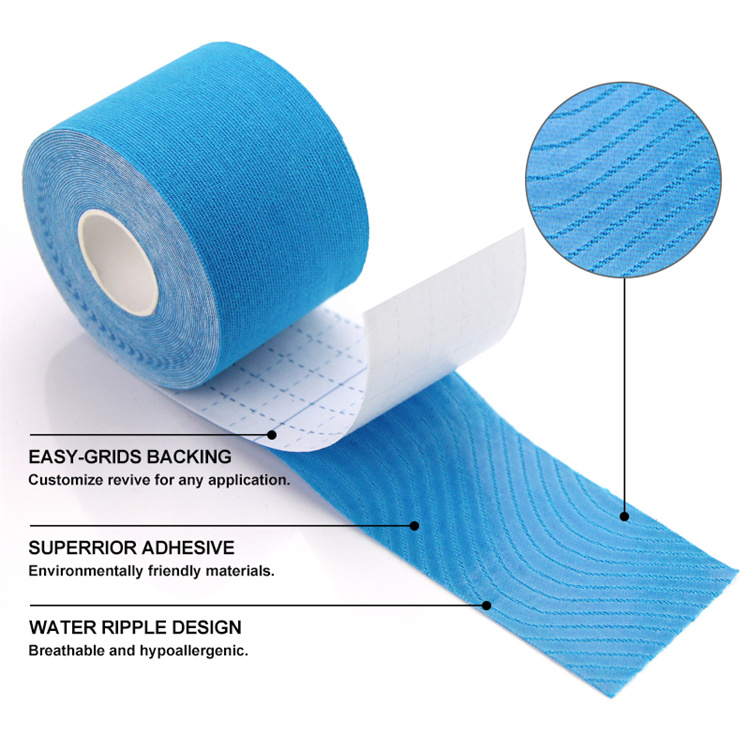
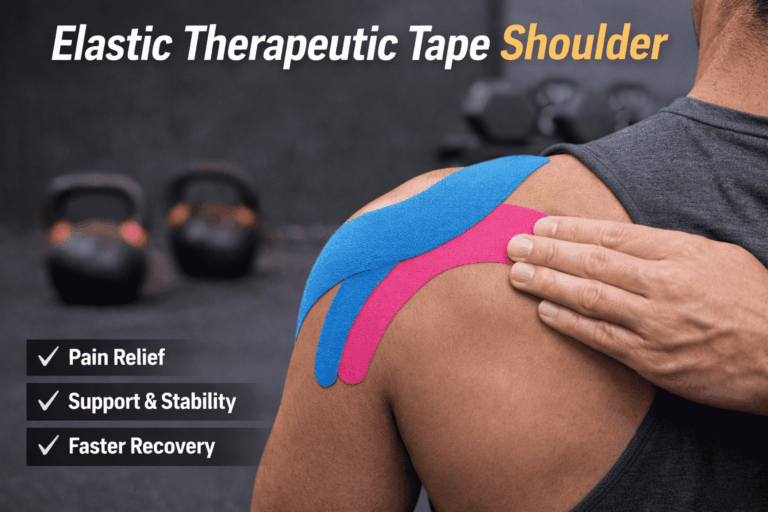
The ankle is one of the body’s most complicated and often painful joints.  It has to hold up the full weight and force of movement every day and during intense sports. A kinesiology bandage, also known as a 코튼 운동 요법 테이프 , 물리 치료 테이프 and elastic therapeutic tape, is a high-tech way to get rid of pain, deal with instability, or speed up recovery from an ankle sprain or tendonitis. A good elastic therapeutic tape is different from regular 단단한 스포츠 테이프 because it lets the joint move.  Instead, it gives the joint support that is flexible and breathable, which lets it move freely and eases pain and swelling.

The kinesiology bandage is a must-have for everyone, from physical therapists to weekend warriors, because it doesn’t restrict movement. Top 운동 요법 테이프 제조업체 say that its unique material has a precise 160–170% elasticity and a strong, waterproof adhesive that keeps it in place even when you swim or work out hard.  This helps the joint stay stable and speeds up the body’s natural healing process.

kinesiology bandage

How to use a kinesiology bandage

Using the kinesiology bandage correctly is the most important thing for getting the health benefits. If you don’t wrap it right, it might not give you the support you need, or it might hurt your skin. Unlike using zinc oxide tape, this method lifts the skin and supports the muscle or ligament path instead of just keeping the joint still.

1. It’s important to get ready:   You should start with skin that is clean and dry. Sweat, oils, and lotions will all make the kinesiology bandage’s adhesive less strong. Trim any extra hair in the area where you plan to use the tape.  Always round the edges of the strips after cutting them (or if you are using pre-cut strips, make sure they are smooth) so they don’t get caught on clothes.  This will help the tape last a lot longer.

2. Find out where the tension zones are: The main purpose of a muscle pain strips are to stretch it in different ways.

Anchor Points: The first and last 1–2 inches of each strip must be applied without any tension. This makes sure that the tape sticks well and doesn’t pull on the skin, which can be uncomfortable.

Muscle/Fascia Support: To stretch a muscle belly, lightly pull it along the length of the muscle by 10% to 25%.

Ligament/Tendon Support: If you want to keep a joint stable or support a specific ligament, like the Achilles or ankle ligaments, you might need to use a higher tension (50–75%) for the best support.

3. Getting the tape to stick: Always rub the tape hard from the center out after putting on the strip. When you rub the tape, it creates the friction that makes it stick to the skin better and last longer.

How to put on a kinesiology bandage?

Putting a elastic therapeutic tape on an injured or unstable ankle makes a “stirrup” pattern that supports the ankle and relieves pain in the damaged ligaments. This is a common and effective step-by-step method:

1. The Base and Lower Anchor:

Strip: Cut a long strip that looks like an I and is about 10 to 12 inches long.

Use the first anchor (zero stretch) to hold the back of the leg from side to side, just below the calf muscles and above the heel. This makes the vertical support strips safe and steady.

2. The Stabilization Stirrup (Keeping the Roll in Check):

For the strip, use a long I-strip kinesiology bandage.

Use: Start on the outside of the ankle (lateral side) and attach the strip without pulling it down below the first anchor. Now, as you run the strip down past the ankle bone, under the heel, and up the inside of the ankle (medial side), pull it with 50–75% of its full strength. To finish the strip, put a zero-tension anchor above the first anchor point. This creates a “stirrup” of support that keeps the body from moving too much from side to side, which is a major cause of sprains.

3. Pain and Ligament Support (The Basket Weave):

For the strip, use an I-strip kinesiology bandage that is medium in length.

Application: This is where you put your focus on the painful area, which is usually the anterior talofibular ligament on the outside of the ankle. Place one end in place without putting any pressure on the top of the foot, near the base of the toes. Pull the strip diagonally across the sore spot with 25–50% of its strength, and then put the last anchor with no tension on the lower shin. You can repeat this step with a second strip that is a little lower than the first to make an “X” shape kinesiology bandage that supports the area that is the most unstable.

4. How to turn it on and take care of it after use:

Once you’ve put on all the strips of the cotton kinesiology tape, rub them all down hard to make the glue stick. Look for wrinkles or spots where the skin is very puckered, as these can cause blisters.

The cotton kinesiology tape will start to work right away, lifting the joint mechanically to ease pain and help fluid move away from the swollen joint. The user should pay attention to how comfortable they are and make sure their circulation isn’t affected.

요컨대

The kinesiology bandage is a strong and flexible way to take care of an ankle.  It is a more flexible choice than 산화 아연 테이프. By carefully preparing the skin, changing the tension as needed (especially using zero tension at the anchors), and putting the tape on in the “stirrup” and “basket weave” patterns, users can greatly reduce pain, control swelling, and get their confidence back in their ability to move. This supportive cotton kinesiology tape will keep working for several days of active recovery if you use high-quality, long-lasting tapes from experienced manufacturers.

목차

여기서 멈추지 마세요

더 살펴보기

best sports tape

Why Best Sports Tape Begins with Professional Manufacturing

In the fiercely competitive world of sports, athletes and medical professionals relentlessly pursue any advantage that enhances performance, prevents injuries, and accelerates recovery. However, in this pursuit of excellence, choosing

muscle stretch tape

The Benefits of Muscle Stretch Tape for Sports

Muscle stretch tape is likely familiar to anyone knowledgeable about it or who has used it. It frequently appears in various forms and styles during elite athletes’ competitions. Whether it’s Olympic volleyball

키네시올로지 테이프를 구매할 수 있는 곳

Bulk Kinesiology Tape: Unlocking Efficiency and Value

Cotton kinesiology tape is widely used and constantly expanding in popular sports, physical therapy, and everyday health fields, from supporting athletes’ shoulders, backs, knees, and ankles to aiding post-operative rehabilitation

연락 유지

세부정보를 입력하시면 곧 연락드리겠습니다.

연락 유지

제품 카탈로그를 받으시려면 이메일을 입력해 주세요.